
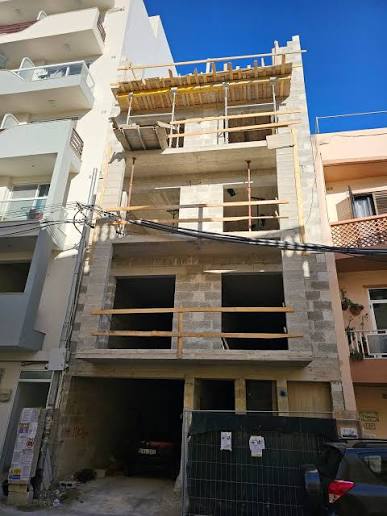
Property owners who suffer damage from neighbouring construction works should be able to establish where to bring their claim without first becoming embroiled in a dispute about court jurisidiction issues. A recent judgment of the Small Claims Tribunal highlights the need to clarify the relationship between the Avoidance of Damage to Third Party Property Regulations, S.L. 623.06, and the Arbitration Act, Chapter 387.
S.L. 623.06 seeks to reduce the risks that demolition, excavation and construction pose to neighbouring properties and their occupants. Recently, the Building and Construction Authority proposed a scheme to compensate for damage sustained up to €15,000, with the amount recoverable from the developer carrying out the construction works. Regulation 20(2) of SL 623.06 directs certain disputes concerning damage to third-party property resulting from construction activity on a contiguous site to arbitration. It states that the rules governing mandatory arbitration under the Arbitration Act apply. The apparent purpose is to provide a defined route for resolving these disputes. Whether that route is the correct judicial route has become subject to a significant question.
In Georgina Bugeja v Josette Stoilov and Dragan Stoilov, application 205/2024 CC, decided on 16 June 2025, Adjudicator Dr Christopher Chircop considered a preliminary objection that the Small Claims Tribunal lacked competence because the dispute should have been referred to arbitration under regulation 20(2) of SL623.06. This decision may still be subject to appeal.
The Tribunal referred to evidence given by the Registrar of the Malta Arbitration Centre that the Centre could not accept mandatory arbitrations under S.L. 623.06 because the Fourth Schedule to the Arbitration Act did not include that category of dispute. According to this evidence, no mandatory arbitration under these regulations had been instituted with the Malta Arbitration Centre.
Faced with the evidence presented by the Registrar, the Tribunal rejected the defendants’ preliminary plea on the jurisdiction of the court. The judgment concerned the appropriate forum; it did not determine liability for the alleged damage. Its practical significance nevertheless extends beyond the particular dispute: a statutory direction to arbitrate had encountered an institutional obstacle to its implementation.
The legal position deserves careful examination. It would be too categorical to suggest that the Fourth Schedule necessarily contains every dispute capable of mandatory arbitration. Article 15(11) expressly recognises disputes designated by other laws, while article 75(1), subject to its exception, provides for a statutory requirement to arbitrate to be read as an arbitration agreement. These provisions offer an argument that regulation 20(2) of SL 623.06 has an operative basis even without a specific entry in the Fourth Schedule.
Yet the existence of that argument does not resolve the practical uncertainty exposed by the judgment. A person seeking compensation needs a remedy that can be accessed and administered. Uncertainty over the correct forum adds expense, delays the examination of the damage and creates another procedural hurdle for the affected owner.
A legislative intervention is being suggested to retain compulsory arbitration for claims below €1 million concerning damage to third-party property resulting from construction activity on a contiguous site, provided that no claim for personal injuries is involved. This would preserve the arbitration mechanism envisaged by regulation 20(2), including its express exclusion of personal injury claims, while making its scope clear and its operation effective.
Clarity is key. The present regulation refers to claims that do not exceed €1 million, which includes claims for exactly that amount. Its proviso also connects the condition concerning structural stability and the safety of users with the monetary condition through the word “or”. Any amendment should therefore state unequivocally how the monetary threshold operates and how damage affecting structural stability or endangering users is to be treated.
In view of the position taken by the Registrar of the Malta Arbitration Centre, the necessary amendment to the Fourth Schedule to the Arbitration Act needs to be carried out for more clarity. It should expressly include the construction damage disputes covered by regulation 20(2), with clearly aligned conditions in both instruments. This would remove the doubt identified in the cited case and provide a clear basis for the Centre to receive and administer these mandatory arbitrations.
Article 15(13) empowers the Minister responsible for justice to amend the categories of disputes in the Fourth Schedule by regulations. That mechanism should be used to give practical effect to the compulsory arbitration provision, with appropriate transitional arrangements for proceedings already instituted.
The objective in this situation is to provide a clear and workable arbitration remedy for qualifying construction damage claims. Property owners should not have to resolve uncertainty between legislative instruments before their claim for compensation can be heard. Retaining the compulsory arbitration clause and expressly incorporating the relevant disputes into the Fourth Schedule would provide the clarity that effective remedies require. Legislative clarity is called for.